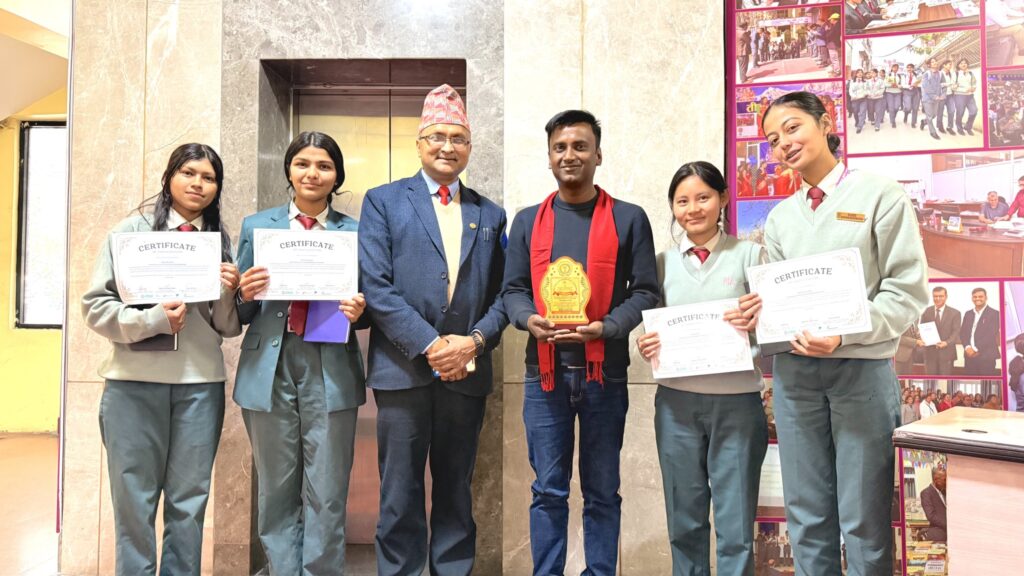
One of the most significant contributions in conservation biology may not be in the field, but in the minds of people. A recent experience at the Reliance International Academy was a beautiful reinforcement of this fact. It was an honor and a privilege to share my experience in the Bengal Florican Project at the Science Fair at the Reliance International Academy, where curiosity, creativity, and conservation met at one place. Receiving the token of appreciation from the institution was very humbling; however, what made the event significant was the level of engagement and interest shown by the students and visitors.
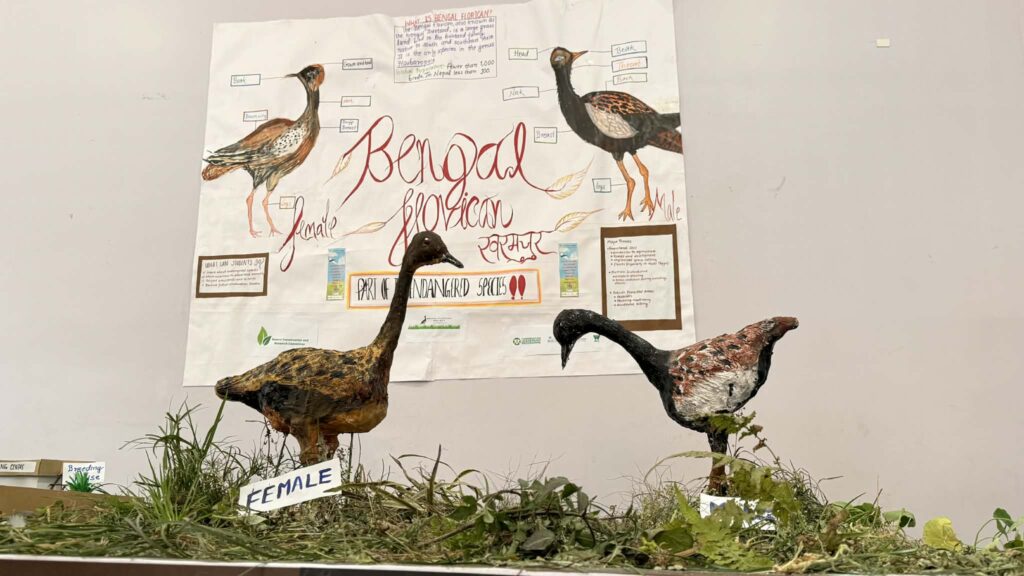
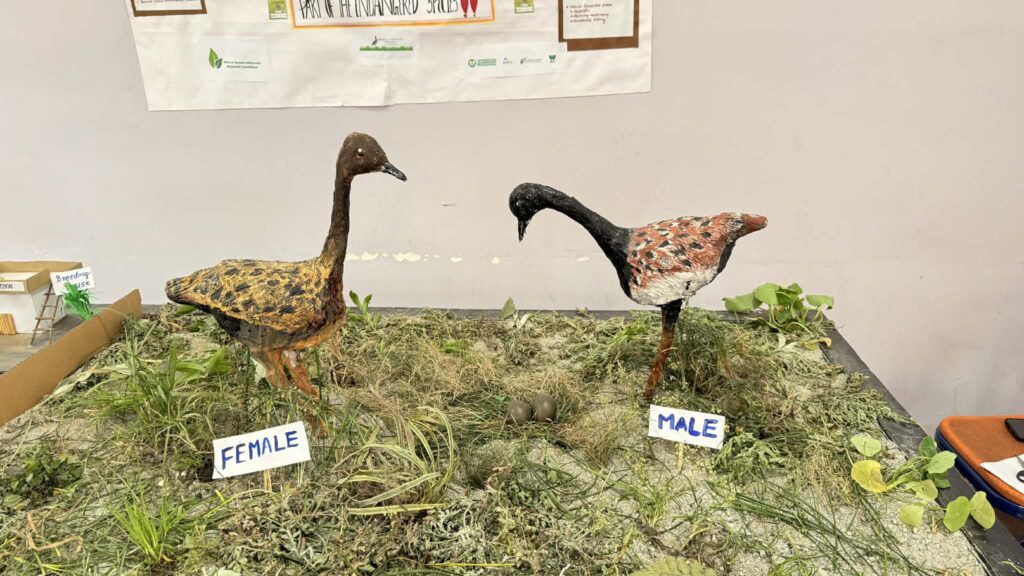
At the heart of this campaign is the Bengal Florican, a critically endangered grassland species that faces a rapidly worsening threat of extinction. This elusive bird once had a wide range in South Asia’s floodplain grasslands, but today faces alarming population declines mainly because of habitat destruction, fragmentation, and mismanagement. As conservation biologists, we often use data, modeling, and direct observation to inform conservation efforts, but communicating these realities to a wider audience remains one of our greatest responsibilities. The Science Fair was a significant opportunity to bridge that gap. A special mention should be made of Mr. Indra Ghimire and the students who worked on the Bengal Florican project. Their project did not just stop at a typical school science fair presentation. With intricately designed male and female models, detailed habitat presentations, and a remarkably realistic drawing, they have not only shown their artistic skills but also a deep understanding of the species’ ecology and conservation status.

What was most impressive was their capacity to communicate complex ideas in ecology, such as morphology, breeding behaviors, habitat specificity, and threats, in a manner that would resonate with the general audience. This is the very essence of effective science communication that can bring about true change in society.
The event was a success in terms of reach, with over 3,000 visitors attending and each going home with a heightened awareness of the Bengal Florican and the grassland ecosystems in which they live. For a species that often flies under the radar, so to speak, such exposure can only be seen as a good thing. Conservation starts with awareness, and awareness starts with conversations such as these.
One of the proudest moments was when the Chief Guest of the event recognized the Bengal Florican Project in his speech. Such recognition not only gives credence to the project’s existence but also highlights the importance of protecting species such as the Bengal Florican, which may not be as well-known but are nonetheless critical to the health of our ecosystems.
This experience reinforced a basic truth: conservation works when science meets society. Data cannot save species; people can. And when we involve young people in conservation issues, we do not just educate them; we empower them as advocates, innovators, and future conservation leaders in our collective quest to protect our natural heritage.
As we continue our journey towards the conservation of the Bengal Florican and its threatened habitats, such programs reinforce our resolve that hope for conservation does not reside in protected areas or policy documents; hope resides in classrooms, conversations, and communities.
In the end, conservation is not just about saving a species; conservation is about inspiring a generation of conservationists.